

Email: [email protected]Phone: 1800 324 872
Coastal Rowing: A New Olympic Gateway
21 July 2025
Share

Beach Sprint Rowing will make its Olympic debut at the Los Angeles 2028 Olympic Games, marking a historic shift in how athletes can compete in the sport of rowing at the highest level. Unlike traditional racing, beach sprints bring a new energy to the sport, being shorter, faster, and more dynamic, while opening the door for a broader, more diverse field of competitors from around the world.
The buzz extends beyond just the athletes. With growing popularity, boat manufacturers are innovating and ramping up production of coastal boats to meet the rising demand from clubs, events, and individuals entering this new discipline of rowing. The beach sprint format removes barriers to running events like permanent infrastructure of a 2000m lake, and instead favors athleticism, agility, and adaptability located in beaches and open water.
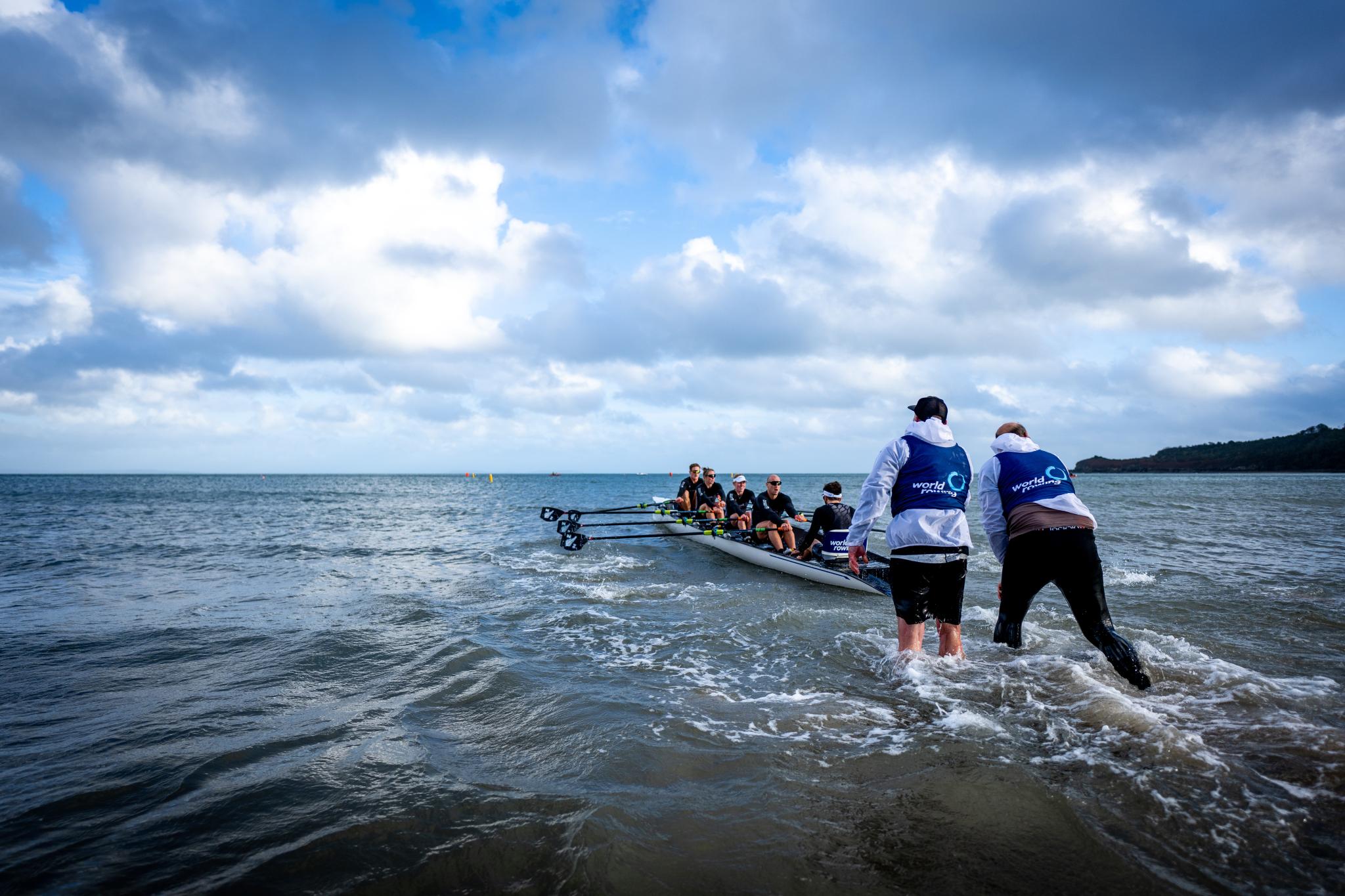
Recent event activity reflects the surge in interest. The Filippi Trophy 2025 has expanded to a four-stage international circuit. Staged on popular coastlines with live footage, live commentary, and fans just meters from the racing, the event highlights rowing’s potential as a true spectator sport. While World Rowing® has announced that the 2025 World Rowing Beach Sprint Finals, originally planned for Rio de Janeiro, will now take place in Antalya, Turkey, November 6-9, 2025, there is still a strong calendar of events for athletes to target in preparation for the rescheduled event.
In the United States, the Boston Beach Sprints, organized by Head Of The Charles®, are helping to introduce the format to a North American audience. Held at Carson Beach, the event will be free to spectate making it a great opportunity to get an idea of Beach Sprint racing for those new to the sport. The event includes coaching clinics, and of course racing with international matchups, it is an opportunity not to be missed. Supported by Concept2®, it has quickly become a focal point for Beach Sprint development in the region. The event aims to grow and become a benchmark of Beach Sprints racing in the U.S.A. leading up to the 2028 Olympic Games. Boston Beach Sprints are scheduled to take place July 26-27, 2025, with the weekend opening with a Beach Sprint Clinic on Friday, July 25 led by USRowing.
What makes Beach Sprints so compelling is not just its format, but also its philosophy. The races are fast-paced and spectator-friendly, with sprint runs, sharp buoy turns, and dramatic beach finishes. It also makes rowing available to a new set of athletes in areas where traditional rowing is not feasible. Without the requirement for specialized lakes and fixed courses for elite competitions, it could allow more nations to establish international rowing programs. In coastal rowing however, the results can sometimes depend as much on the environment as on the athlete. The unpredictable water conditions mean that races reward flexibility and grit just as much as raw power or perfect technique.
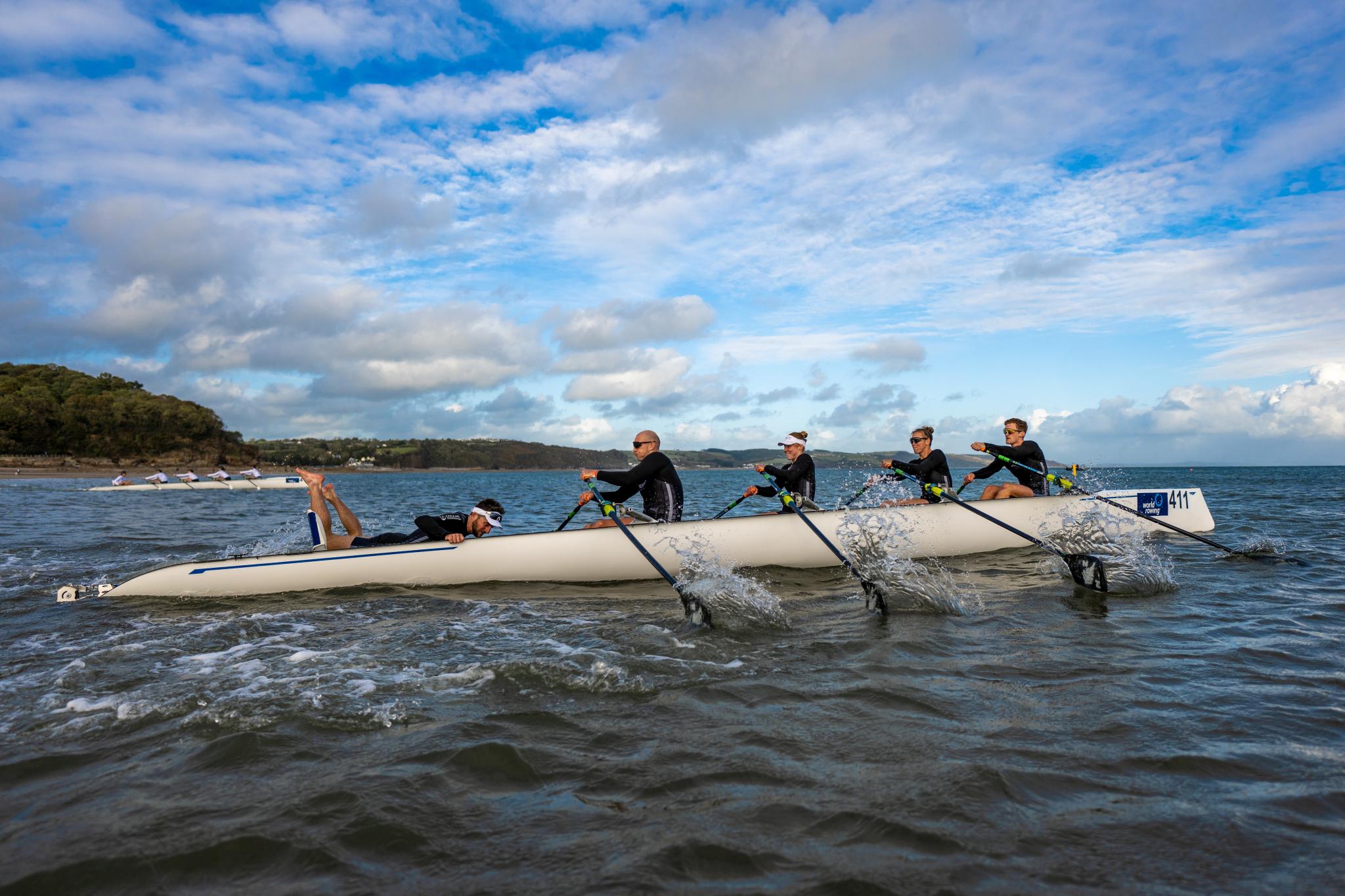
But coastal rowing does not stop at Beach Sprints. This is just one of several formats reshaping what the sport can look like. Here is a closer look at the broader world of rowing and how each discipline offers its own challenges and rewards:
Classic Rowing - The most traditional form of the sport, often associated with the Olympics, national teams, and collage competition. Raced on calm, sheltered water, it uses sleek, narrow boats such as singles, doubles, pairs, quads, fours, and eights, all equipped with sliding seats. This discipline emphasizes speed, rhythm, and precise technique with straight-line racing.
Coastal Rowing - Takes place in more rugged environments. Boats are wider and more stable, built to handle waves, wind, and surf. Raced in singles, doubles, quads, and mixed doubles, coastal events often include tight turns and courses, usually up to 6 kilometers in length. At the World Rowing Coastal Championships, endurance racing is the main format blending navigation, stamina, and adaptability to changing conditions.
Beach Sprint Rowing - Combines the excitement of coastal rowing with the intensity of sprint racing. Raced in coastal boats, the format begins with a beach run to the boat, followed by a short zigzag course with a buoyed turn, and ends with a sprint back up the beach. The event features singles, mixed doubles, and mixed quads.
Gig Rowing - Strong maritime roots and is especially popular in the UK. Crews row fixed-seat wooden boats, often in sixes, where the seats do not slide and emphasis is placed on upper-body strength and teamwork. Different types of fixed-seat rowing exist depending on region, tradition, and boat style—some using one oar per rower, others two. Gig rowing continues to thrive in coastal communities as both a sport and a social tradition.
Ultra-Distance Rowing - Including ocean crossings, is the most extreme form of the sport. Using specially designed ocean-class boats, teams and solo rowers attempt to cross entire oceans, such as the Atlantic or Pacific. These journeys last weeks or even months, with participants facing harsh conditions, exhaustion, sleep deprivation, and complete self-reliance. Concept2 is proud to be the Official Training Partner of the World’s Toughest Row, supporting athletes as they prepare for the ultimate test of endurance and mental resilience.
Each of these disciplines showcases a distinct character of rowing: the precision of flatwater, the grit of coastal endurance, the spectacle of beach sprints, the tradition of gigs, and the audacity of ocean crossings. Together, they show that rowing is no longer limited to straight lines and calm lakes—it is a global, dynamic sport.
Concept2 proudly supports this global movement, celebrating the diversity of rowing that has something to offer for everyone. Check out our coastal oars here to learn more.
Recent Posts
Get Updates and Training Tips from Concept2
Tags: